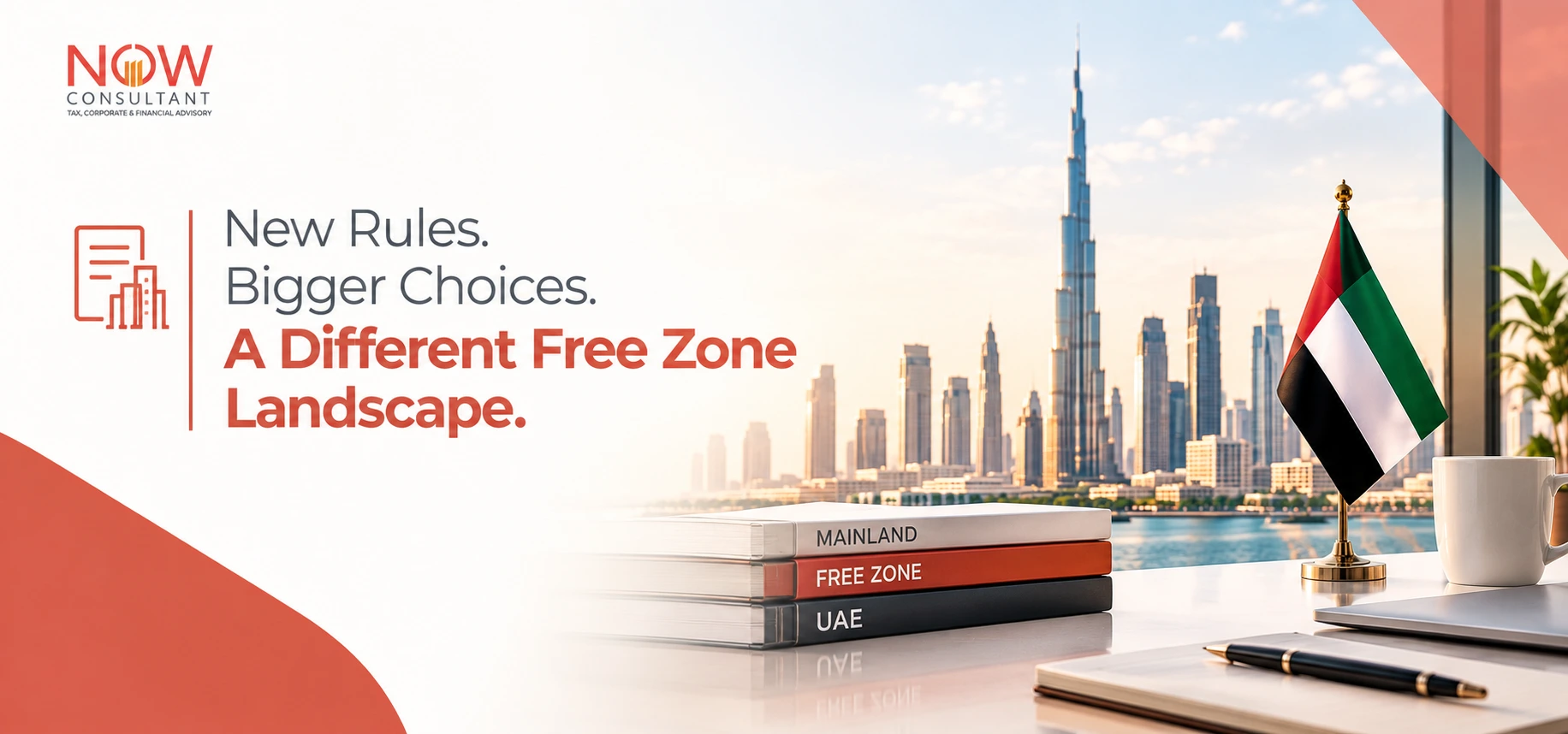
Foreigners can now own 100% of most mainland companies in Dubai. The old ownership advantage of free zones is gone. Lately, the choice is largely based on your office, your customers, your visa requirements and your company tax scenario.
For years, the advice was simple. Choose a free zone for full ownership. Choose the mainland for local access. That advice is now outdated. This guide explains what changed and how to choose the right structure for your business setup in Dubai.
What 100% Mainland Ownership Really Changed
The UAE removed the old rule that required a local partner to hold 51% of most mainland companies. Most commercial, consultancy, technology and trading activities now allow full foreign ownership.
This changed the mainland company formation conversation completely. Ownership used to push founders toward free zones. It no longer does.
Some activities still need extra approval. These are called strategic impact activities. Examples include certain regulated sectors. Always confirm your activity code with the Department of Economy and Tourism (DET) before you pay for anything.
The New Office Rules: Where the Real Difference Sits
Ownership is now equal. Office requirements are not.
Mainland companies need a real office. DET requires proof of premises. Your lease must be registered on Ejari, Dubai’s tenancy registration system. Without a valid Ejari record, your trade license may not be issued or renewed.
Your office size affects your visas. On the mainland, the number of employee visas is generally tied to your registered office space. A small desk supports fewer visas. A larger office supports more.
Free zones stay more flexible. Many offer a flexi desk or shared office. These are cheaper and quicker. They usually support a limited number of visas, often between one and three. Some zones also offer virtual-only packages for digital businesses.
The trade-off is clear. A flexi desk lowers your starting cost. It can also limit your team size and your access to local clients.
Dubai’s Dual Licence Framework Adds a Third Path
Dubai now has a formal route for free zone companies to work on the mainland. Executive Council Resolution No. 11 of 2025 allows two options:
- A branch licence. Your company stays based in the free zone but can operate in mainland Dubai. It is valid for one year and renewable.
- A temporary permit. This covers specific activities for up to six months.
DIFC entities are excluded. Mainland activity also needs separate financial records. This helps founders who want low starting costs and future mainland access. It does not remove the need for planning. Confirm which activities are eligible with DET first.
Corporate Tax Now Shapes the Decision
Tax is the other big shift. The UAE charges 9% corporate tax on taxable profit above AED 375,000. Free zone companies can still receive 0% on qualifying income. They must meet the Qualifying Free Zone Person conditions.
Two points matter here:
- Income from mainland customers is usually not qualifying income for a free zone company.
- Falling outside the conditions can move your whole business to the standard 9% rate.
So a “0% free zone” can cost more than expected if your model relies on local sales. Early advice on corporate tax registration, VAT registration and accounting services protects you from this.
What the Market Data Shows
Across current adviser guidance and competitor content in 2026, three patterns repeat.
- Ownership is treated as a settled topic. Advisers now focus on office, tax and banking.
- Banks look closely at substance. Banks often ask about your office, your customers and your activity during bank account opening.
- Founders want both markets. Interest in dual licensing keeps rising because businesses want low setup costs and local reach.
Typical cost signals also help. Small offices often start around AED 15,000 per year. Flexi desks are often cheaper. Generally, Ejari registration is a nominal fee. Prices will depend on the location and the provider – always ask for a written quote.
Mainland vs Free Zone: Side-by-Side
| Factor | Mainland (DET) | Free Zone |
| Foreign ownership | 100% for most activities | 100% |
| Local market access | Unrestricted | Limited unless dual licensed |
| Office | Physical, Ejari-registered | Flexi desk often accepted |
| Visa quota | Linked to office size | Linked to package or space |
| Corporate tax | 9% above AED 375,000 | 0% on qualifying income if conditions are met |
| Government tenders | Yes | Generally no |
Which Structure Fits Your Business?
Choose the mainland if:
- You sell to UAE consumers or businesses directly.
- You want government or corporate contracts.
- You need a shop, clinic or restaurant.
- You plan to hire a larger team.
Choose a free zone if:
- Your clients are mainly international.
- You run consulting, e-commerce, or digital services.
- Your activity qualifies for 0% tax and you can keep the conditions.
- You want a lean, low-cost start.
Consider a dual licence if you start in a free zone but expect mainland clients within a year.
Common Mistakes to Avoid
- Choosing by license price alone. Visa costs, office costs and tax can change the total.
- Buying a flexi desk for a mainland licence. It usually will not satisfy DET.
- Ignoring compliance after setup. You still need VAT registration when required, a UBO declaration, and proper bookkeeping.
- Picking the wrong activity code. Changing it later can mean new approvals and delays.
Changing structure later often means a new licence, a new office and a new immigration file. Getting it right first is cheaper.
How Now Consultant Helps
The free zone decision is no longer about ownership. It’s about where customers are and what office you can serve and how your income is taxed. Structure is not a price list, it’s the structure of your business. But a brief consult now can save months of rework later. A short consultation now can save months of rework later. Now Consultant supports founders from the first decision to ongoing compliance. Our team handles mainland and free zone company setup across DMCC, IFZA, Meydan, RAKEZ and SHAMS. We also manage PRO services, bank account opening support, accounting and bookkeeping, VAT return filing, and audit services.
In one recent case, a client completed visa processing, the medical test and private bank account opening during a short Dubai visit. Careful coordination made that possible.
Not sure which structure fits you? Book a free consultation or message us on WhatsApp. You can also download our UAE Tax & Business Setup Guide.